Wood Lathe vs Metal Lathe for Home Hobbyists UK – Which Should You Buy?
If you're setting up a home workshop and wondering whether to invest in a wood lathe or metal lathe, you're facing a genuinely important decision. Both machines are capable, rewarding to use, and unlock different creative possibilities—but they serve fundamentally different purposes, demand different skills, and require different levels of space and investment. Getting this choice wrong means either buying equipment you won't use or learning the hard way that your chosen machine isn't suited to what you actually want to make.
What Each Lathe Does
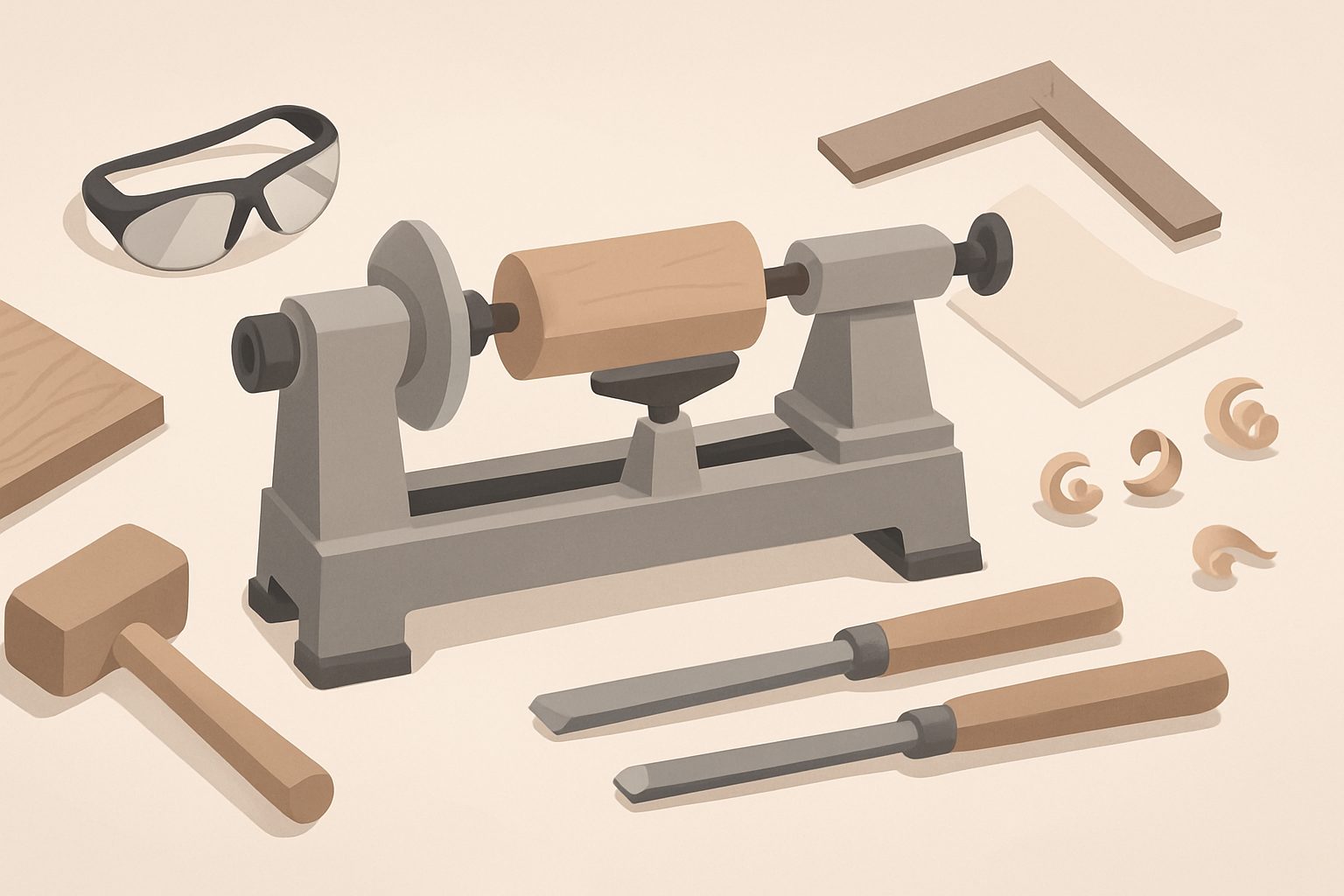
A wood lathe spins a block of timber at high speed whilst you hold hand tools against it to shape bowls, spindles, pens, and decorative pieces. The wood is secured between centres or held in a chuck, and you remove material by hand. It's an additive-removal process that feels almost sculptural—you're exposed to the wood as it turns, watching the shape emerge in real time.
A metal lathe (or metalworking lathe) holds metal in a chuck and uses powered cutting tools to remove material with mechanical precision. The tool sits in a tool post and advances automatically, producing threads, tapers, cylindrical shapes, and precisely dimensioned parts. Metal lathes are fundamentally more controlled and repeatable, but require understanding feeds, speeds, and tool geometry.
Cost Comparison
This is where the first real difference emerges. Entry-level wood lathes in the UK start around £200–£400 for budget benchtop models (companies like Record Power and Jet make decent starter units in this range). A decent mid-range wood lathe—capable, sturdy, good community support—sits at £600–£1,200.
Metal lathes are a different animal financially. Even basic benchtop metalworking lathes (Sherline, Taig, or similar) start at £1,500–£3,000. A no-frills used metal lathe might cost less, but you're often inheriting wear, loose spindle bearings, or missing accessories. New entry-level metric lathes from manufacturers like Warco or Axminster run £2,500–£5,000. If you want something that will hold precision and survive years of serious use, budget £4,000 upwards.
Verdict: Wood lathes are dramatically cheaper to start.
Workshop Space
Wood lathes are relatively compact. A benchtop wood lathe occupies roughly 1.5m × 0.8m of bench space, though you'll want clearance around it for tool storage and comfortable working. Dust extraction helps but isn't mandatory for casual work (though it should be).
Metal lathes are heavier, more rigid, and take up comparable footprint, but they demand better stability (typically a dedicated stand or bolted base), and you'll need space around them for long workpieces. If you're working on shafts or spindles longer than about 300mm, you'll notice the space constraint immediately.
Both fit in a typical garage workshop, though neither appreciates being crammed into a corner.
What You Can Actually Make
This is the real question, and it's where personal interest should drive your decision.
Choose a wood lathe if you want to:
- Turn bowls, vessels, and hollow forms
- Make spindles, stair balusters, or decorative table legs
- Craft pens, bottle stoppers, ornaments
- Explore sculptural turning and artistic work
- Make spalted or figured timber pieces that showcase wood's natural beauty
Wood turning is accessible, visually immediate, and surprisingly meditative. You see results in hours. A beginner can make a respectable bowl in a single session.
Choose a metal lathe if you want to:
- Make metal fittings, bushings, or replacement parts
- Produce threaded shafts or collets
- Work with steel, brass, or aluminium to tight tolerances
- Build components for engines, machines, or mechanical projects
- Pursue precision mechanical work as an art form
Metal turning has a higher technical ceiling. You're learning about speeds, feeds, cutting geometry, and material properties. But if you enjoy problem-solving and precision, it's deeply satisfying.
Learning Curve and Safety
Wood turning is intuitive. After an afternoon's instruction, you'll have the basics of tool control. Yes, catches and catches happen—a tool can grab and suddenly jerk—but they're usually minor if you respect the spinning wood. Proper stance and tool control matter, but the learning curve is gentle.
Metal turning demands more respect for the machine. Loose clothing, jewellery, or long hair near a metal lathe is genuinely dangerous. Improper feeds can snap tools or break workpieces. Chip extraction requires attention. That said, metal lathe operators develop a particular caution and precision that becomes second nature.
Both are safe when approached seriously. Wood turning feels more forgiving; metal turning is more demanding of discipline.
Noise, Vibration, and Dust
Wood lathes are relatively quiet, generate moderate vibration, and produce a lot of fine dust (which is why dust extraction matters for your health). A benchtop wood lathe won't disturb neighbours if you run it during daylight hours.
Metal lathes are noisier—chips clatter, the machine itself vibrates more heavily, and variable speeds mean you'll hear differences depending on what you're cutting. They're not prohibitively loud, but they're louder than wood lathes. And metal shavings are sharp and prolific; chip collection is essential.
Which Should You Buy?
Buy a wood lathe if: you have modest budget, want quick learning and visible results, prefer artistic or creative work, or aren't sure whether turning will stick as a hobby. Start with a mid-range benchtop unit—something like the Record Power Cornford or Jet Mini.
Buy a metal lathe if: you're mechanically minded, enjoy precision work, already have machining experience or mentorship, or your projects genuinely require metal components. Commit to used machinery from a known maker (Colchester, Emco, Myford) or new benchtop models from reputable suppliers.
Buy both if: your workshop can accommodate them, your budget allows, and you want to explore different materials. Many serious hobbyists do—wood lathe for creative work, metal lathe for utilitarian projects.
The honest answer is that a wood lathe offers lower financial and logistical risk, immediate gratification, and surprising depth. If you're genuinely undecided, that's usually the better first choice.
More options
- Wood Lathes – General (Amazon UK) (Amazon UK)
- Record Power Wood Lathes (Amazon UK) (Amazon UK)
- Jet Wood Lathes (Amazon UK) (Amazon UK)
- Wood Lathe Chucks & Jaw Sets (Amazon UK) (Amazon UK)
- Woodturning Chisel & Tool Sets (Amazon UK) (Amazon UK)