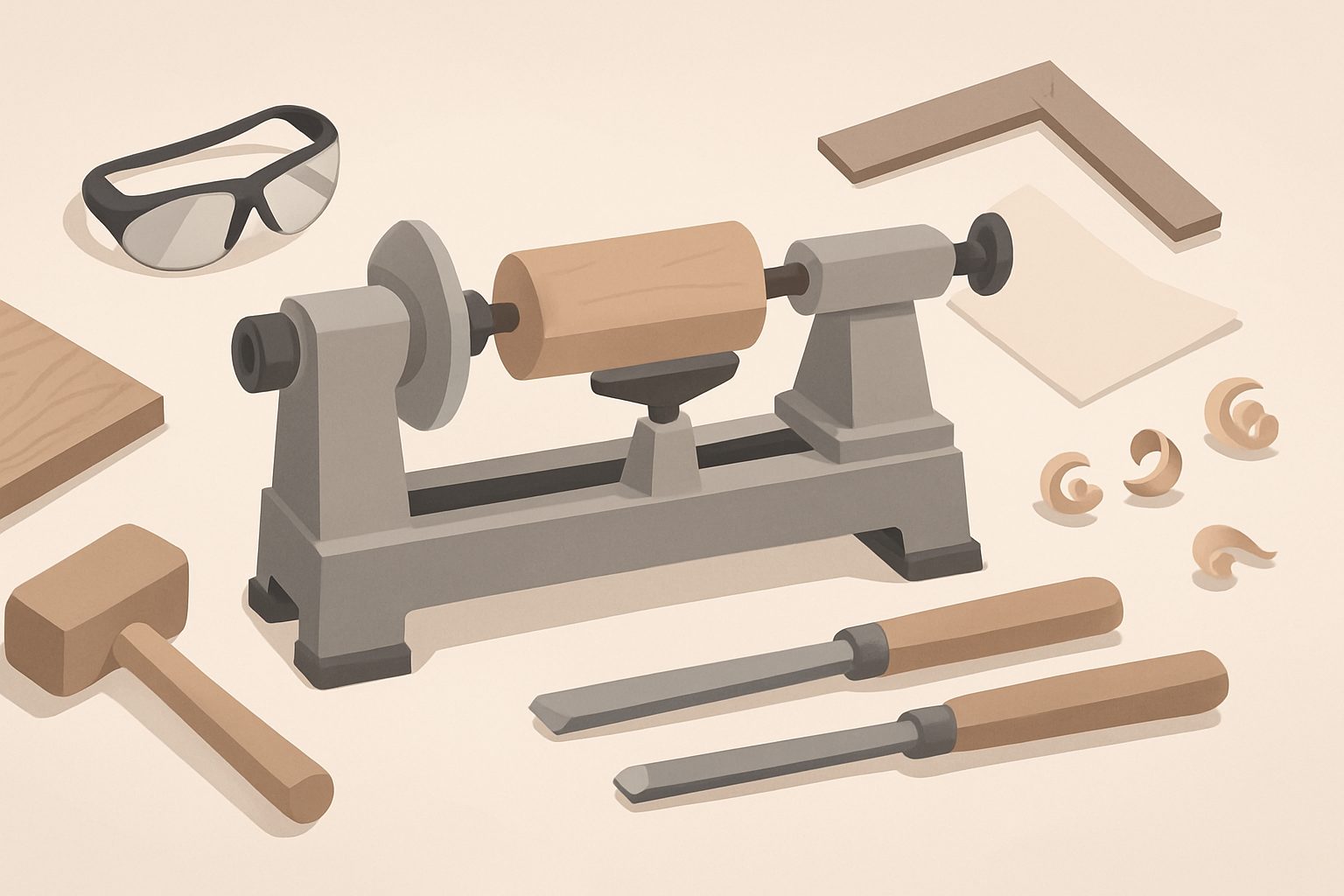
Best Benchtop Wood Lathes UK Under £300 – Budget Buys That Deliver
If you're setting up a home workshop or expanding into woodturning without breaking the bank, a benchtop lathe under £300 is a sensible starting point. You won't get the precision of premium machines, but modern budget lathes are genuinely capable tools for spindle work, small bowls, and learning the fundamentals. Here's what you need to know about the best affordable options available now.
What You Get at This Price Point
Expect a machine weighing 25–40 kg, with a spindle speed range of around 600–3000 rpm. Most will accept 3/8" or 1/2" spindle drive and come with basic accessories: a live centre, dead centre, drive centre, and tool rest. The bed length typically sits between 300–380 mm, which limits your workpiece length but suits home workshops well.
The trade-offs are real. Vibration control is more basic than pricier models. Chuck quality is functional but not precision-engineered. Build quality varies—some machines have variable speed as standard; others are fixed-speed or use stepped pulleys. Dust extraction is often an afterthought, so budget for a separate extractor if you're serious about keeping shavings under control.
That said, these machines will hold tolerances closely enough for spindle turning and small hollow work. The key is understanding that you're buying a learning lathe, not a production tool.
Top Budget Options
Clarke CL5 (£180–220)
Clarke's benchtop entry is hard to beat on price. The CL5 sits firmly in the budget bracket—basic construction, fixed speed around 1800 rpm, modest power. It'll handle softwoods comfortably and lighter hardwoods if you're not aggressive with your cuts. The footprint is compact at around 530 × 290 mm, making it workable in tight spaces.
The variable speed upgrade on some Clarke models (if you can find one in stock) adds flexibility—crucial for larger diameter work or when you're working unfamiliar timber. Standard models are noisy and benefit hugely from being bolted to a solid bench.
Draper 83733 (£240–280)
Draper's offering steps up the specification slightly. You get 500 W of power, variable speed from 600–3000 rpm, and a 450 mm bed length. The all-metal construction feels sturdier than the Clarke, and the variable speed is proper—you can start work on a large blank at low speed and increase as you true it up.
It accepts both 1/2" and 3/8" chucks, giving you more accessory flexibility. The tailstock locks firmly, and the overall build suggests it'll tolerate regular use without loosening or creeping. Downsides: it's louder than you'd like, and the dust shroud is minimal—plan to connect a shop vac.
Record Power DML305 (£250–300)
This is where you're spending top money, but it shows. Record Power is a British manufacturer with serious credentials, and the DML305 punches above its weight. Variable speed, 375 mm bed, and honest engineering throughout. The spindle feels smooth, speeds are consistent, and the tailstock grip is genuinely secure.
The motor is quieter than competitors, and the lathe accepts standard Morse taper accessories, meaning future upgrades and add-ons are straightforward. Holding tolerances is visibly better than the Clarke, and the machine feels built for longevity rather than planned obsolescence.
Comparison Table
| Model | Price | Speed Control | Power | Bed Length | Weight | Best For | |-------|-------|---|---|---|---|---| | Clarke CL5 | £180–220 | Fixed or stepped | 300 W | 300 mm | 25 kg | Tight budgets, small projects | | Draper 83733 | £240–280 | Variable 600–3000 rpm | 500 W | 450 mm | 32 kg | Spindle work, small bowls | | Record Power DML305 | £250–300 | Variable 600–3000 rpm | 500 W | 375 mm | 35 kg | Long-term use, precision work |
What Actually Matters
Speed control is worth saving for. Fixed-speed lathes force you into compromise cuts—too fast for finishing, too slow for efficient roughing. Variable speed lets you work safely and efficiently across different diameters and timber types. If you're only buying one lathe, this matters more than raw power.
Bed length sounds dry, but it governs workpiece length directly. The Draper's 450 mm bed gives you breathing room for traditional spindle work. The Clarke's 300 mm is genuinely limiting if you want to turn larger spindles, finials, or rolling pins.
Motor quality affects lifespan and consistency. Clarke and Draper use standard induction motors; Record Power's are typically more robust. Longevity isn't guaranteed at this price, but it's more likely with Record.
Worth Considering
Before you buy, ask yourself honestly whether you'll use it regularly. A dormant lathe attracts dust and rust. If you're committed, add these costs to your budget: a dedicated extractor (£80–150), chisels if you don't have them (£100–200 minimum for usable sets), and a sturdy workbench to bolt it to—vibration damping is essential.
Second-hand options are worth investigating. Older Record Power or Axminster machines appear regularly and often outlive new budget models. Check for spindle runout using a dial indicator before buying used—it's the most expensive repair.
The Bottom Line
For genuine beginners or hobbyists turning small work, the Clarke CL5 delivers remarkable value. For serious home woodturners or anyone expecting the lathe to earn its space long-term, the Record Power DML305 is the smarter buy—you'll lose the frustration of underpowered equipment within weeks.
The Draper sits sensibly in the middle. All three will teach you turning, produce acceptable results, and prove whether woodturning fits your practice. That's what matters at this budget.
More options
- Wood Lathes – General (Amazon UK) (Amazon UK)
- Record Power Wood Lathes (Amazon UK) (Amazon UK)
- Jet Wood Lathes (Amazon UK) (Amazon UK)
- Wood Lathe Chucks & Jaw Sets (Amazon UK) (Amazon UK)
- Woodturning Chisel & Tool Sets (Amazon UK) (Amazon UK)